


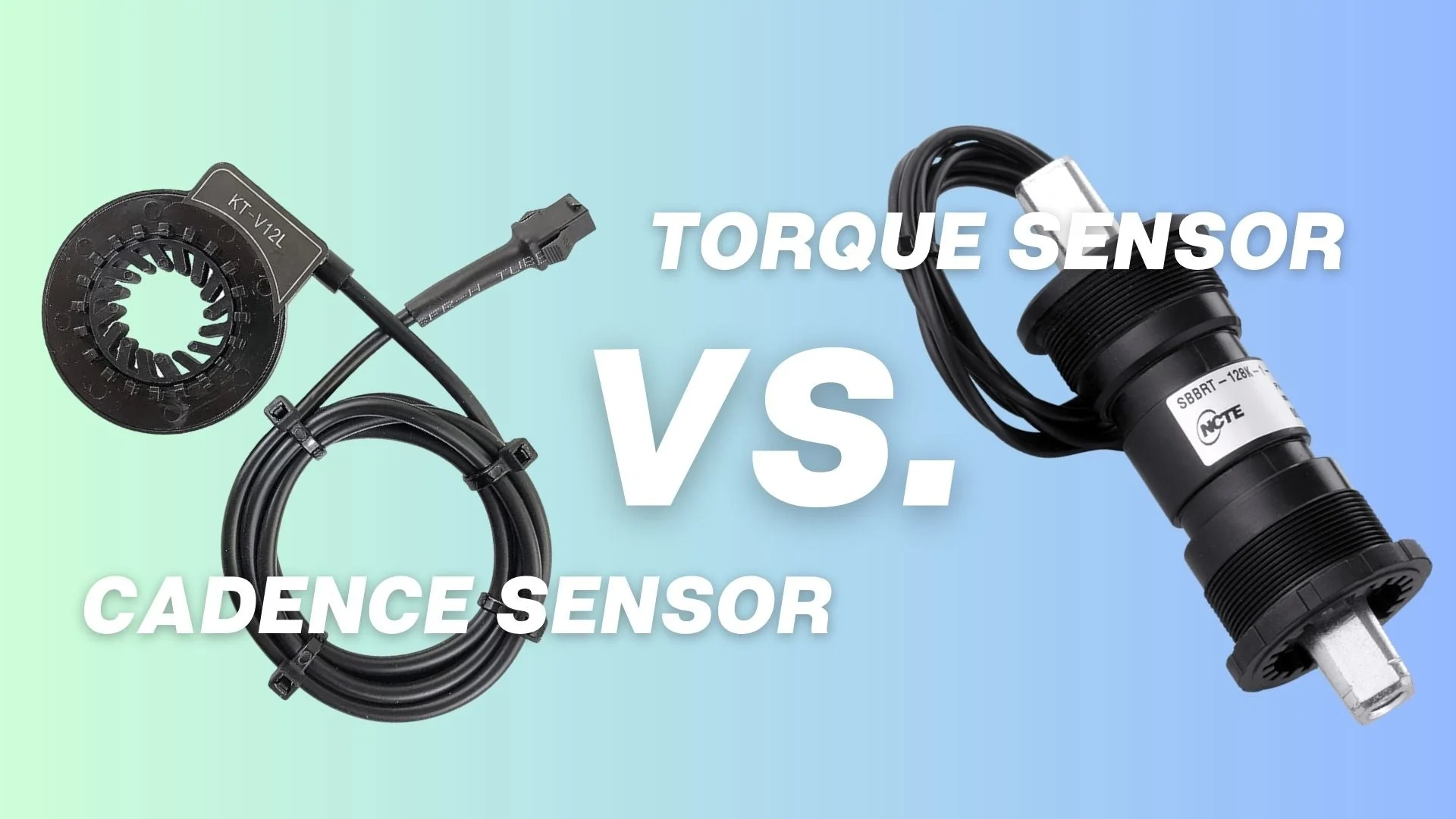
Torque Sensor vs Cadence Sensor: Which E-Bike Is Better for Commuting?

If you’ve been researching electric bikes, you’ve probably come across two common terms: torque sensor and cadence sensor.
At first glance, they may sound technical — but in reality, they directly affect how your e-bike feels every time you ride.
So which one is better for daily commuting?
Let’s break it down in a simple, practical way.
What Is a Cadence Sensor?

A cadence sensor detects whether you are pedaling and activates the motor at a preset level.
Once you start pedaling, the motor provides assistance automatically — regardless of how hard you push.
This means the bike often behaves like this:
- Start pedaling → motor kicks in
- Stop pedaling → motor stops
While this system is simple and affordable, it can feel less natural in real riding situations.
What Is a Torque Sensor?

A torque sensor measures how much force you apply to the pedals and adjusts motor power in real time.
The harder you pedal, the more assistance you get. The lighter you pedal, the softer the support.
This creates a riding experience that feels much closer to a traditional bicycle — just with extra power when you need it.
Key Differences in Real Riding
The difference between these two systems becomes very clear once you start riding.
1. Riding Feel
Cadence sensor bikes often feel like they are “on or off,” which can lead to sudden acceleration.
Torque sensor bikes deliver smooth, progressive power, making the ride feel more natural and controlled.
2. Control in Traffic
In city environments, especially with frequent stops and turns, control matters.
Torque sensors allow you to adjust speed precisely with your pedaling, while cadence systems can feel less predictable.
3. Energy Efficiency
Because cadence sensors provide fixed power, they often use more battery than necessary.
Torque sensors deliver power only when needed, which improves efficiency and extends real-world range.
4. Comfort on Longer Rides
For daily commuting or longer distances, smoother assistance reduces fatigue and improves overall comfort.
This is where torque sensor e-bikes clearly stand out.
Which One Is Better for Commuting?
If your rides are short and occasional, a cadence sensor may be enough.
But for daily commuting — especially 15–25 km per day — a torque sensor offers clear advantages:
- More natural riding experience
- Better control in urban environments
- Improved battery efficiency
- Greater comfort over time
In other words, it’s not just about power — it’s about how that power is delivered.
Why Torque Sensor Matters for Long-Range E-Bikes
For commuters who rely on their e-bike every day, efficiency becomes critical.
A torque sensor helps maximize every charge by reducing unnecessary energy consumption.
This means:
- Fewer charging cycles
- More consistent performance
- Better real-world range
It’s one of the key reasons why long-range commuter e-bikes use torque sensing systems.
Meet Eletronbike Torque Sensor Models
At Eletronbike, several models are designed with torque sensor technology to deliver a smoother and more efficient commuting experience.
OC26 – Built for long-range commuting with up to 130 km range and stable 26” wheels.
OD11 – A balanced city e-bike offering a comfortable ride with natural pedal assistance.
Explore our torque sensor e-bikes
Final Thoughts
The difference between torque sensor and cadence sensor is not just technical — it’s something you feel on every ride.
If you want a smoother, more efficient, and more natural commuting experience, a torque sensor e-bike is the better choice.
Because in the end, the best e-bike isn’t the one with the most power — it’s the one that rides the way you expect.

Share:
Mother’s Day Gift Guide 2026: Best E-Bikes for Moms (10% OFF)
Best Folding E-Bikes for Apartment Living in 2026